Bar Codes Talk Review: The Barcode Provider Many Small Sellers Choose
If you have ever tried to list a new product online, pitch a retailer, or ship inventory into a fulfillment network, you have likely hit a deceptively simple roadblock: you need a barcode, and you need it to be accepted.
That sounds straightforward until you realize you are not really buying a “barcode image.” You are buying a product identifier (usually a GTIN presented as a UPC or EAN) plus the credibility and traceability that come with it. In practice, that means your decision is less about graphics and more about risk management:
- Will marketplaces accept it today and six months from now?
- Will the identifier appear to “belong” to your brand when systems check ownership?
- Will downstream partners (big box retail, distributors, EDI networks) require a specific provenance?
- Will you get locked into annual renewal fees?
Bar Codes Talk positions itself as the “fast, one time cost, no subscription” route: instant delivery, one time pricing, and claims of broad retailer compatibility, with explicit positioning around Amazon usability and a support library that tries to demystify the entire topic.
This review is designed to help you make a confident choice. I will explain what Bar Codes Talk is selling, how it works, where it tends to be a strong fit, where the edge cases live, and how it compares to getting identifiers directly from GS1 US.
BarcodestalkOverall verdict (short version): 8.4/10
Best for: early stage brands, Etsy and Shopify sellers, Amazon merchants who want GTINs quickly, and any small business that values one time pricing and wants a provider with clear documentation and responsive support channels.
Not ideal for: brands that already know they are targeting retailers and distributors that explicitly require GS1 licensing in the brand’s name (for example, some large retailers and certain supply chain programs), or businesses that want the data governance and product data tooling that comes with GS1 membership and Data Hub workflows.
Why the score: Bar Codes Talk is unusually strong on usability, speed, and clarity for a category that is normally confusing. Pricing is compelling (especially if you only need a few identifiers) and their support documentation is more candid than most reseller sites. The tradeoff is not about whether the barcode scans. The tradeoff is about acceptance rules and identity verification in the places where “official GS1 licensing for your brand” is the standard. Bar Codes Talk acknowledges that some retailers may not accept reseller issued GTINs and explicitly calls that out in its Terms of Service.
Here’s what this review covers
- Introduction
- What Bar Codes Talk is (and what it is not)
- A 10 minute primer: what you are actually buying
- Company background and positioning
- What you receive when you buy
- The Bar Codes Talk GEPIR lookup tool
- Buying experience and workflow
- Pricing and value vs GS1 US
- Legitimacy, compliance, and the real risk question
- Compatibility and retailer acceptance
- Amazon: GTINs, exemptions, and the March 31, 2026 labeling changes
- The “Works for Amazon Guarantee”
- Documentation and support quality
- Trust signals and user sentiment
- Strengths and limitations (practical pros/cons)
- A 5-minute decision framework
- Bar Codes Talk vs GS1 US (plain-language comparison)
- Final verdict and recommendations
- FAQ (15 questions)
Introduction
The barcode topic is confusing for one reason: the word “barcode” hides two separate things.
- The identifier (usually a GTIN presented as UPC/EAN): the number that should be unique to your product.
- The symbol (the lines/digits graphic): the scannable encoding of that number on packaging.
Most problems sellers experience in 2025 are not scanning problems. They are acceptance and identity verification problems—specifically when a marketplace or retailer checks who “owns” the company prefix or whether the GTIN originates from a source they consider “official” for your brand.
Bottom line: your decision is less about whether the barcode scans and more about whether the identifier strategy matches your go-to-market channel requirements.
What Bar Codes Talk is and what it is not
At a high level, Bar Codes Talk sells product identifiers (GTINs commonly used as UPC and EAN numbers) and delivers the files and documentation you need to put a scannable barcode on packaging, list products on marketplaces, and verify ownership through their own lookup tools.
Their positioning is built around four promises:
- Speed: instant digital delivery and the idea that this should take minutes, not days.
- One time pricing: no subscriptions and no recurring renewal fees through Bar Codes Talk.
- Compatibility: broad retailer/marketplace usability, with explicit positioning around Amazon.
- Support and guarantees: including a price guarantee and an Amazon-focused guarantee for certain failure modes.
It is important to be precise about what they are not:
- They are not a marketplace, inventory system, or POS platform.
- They are not “just a barcode generator.” A generator can render lines and digits, but it cannot make an identifier credible if the number is not legitimately assigned.
- They are not GS1 US. They are a commercial provider that states its GTINs originate from GS1 US prefixes from the pre-2002 era and that it assigns those numbers onward with lifetime ownership claims.
The right mental model:
Bar Codes Talk = identifier provider + packaging deliverables bundle + support.
GS1 US = standards organization and official issuer (US context), plus governance and product data tooling under membership programs.
Once you frame it that way, the decision becomes easier.
A 10 minute primer: what you are actually buying when you “buy a barcode”
If you already know the difference between a UPC, EAN, and GTIN, you can skim this section. If not, this primer will save you hours of frustration.
GTIN: the core identifier
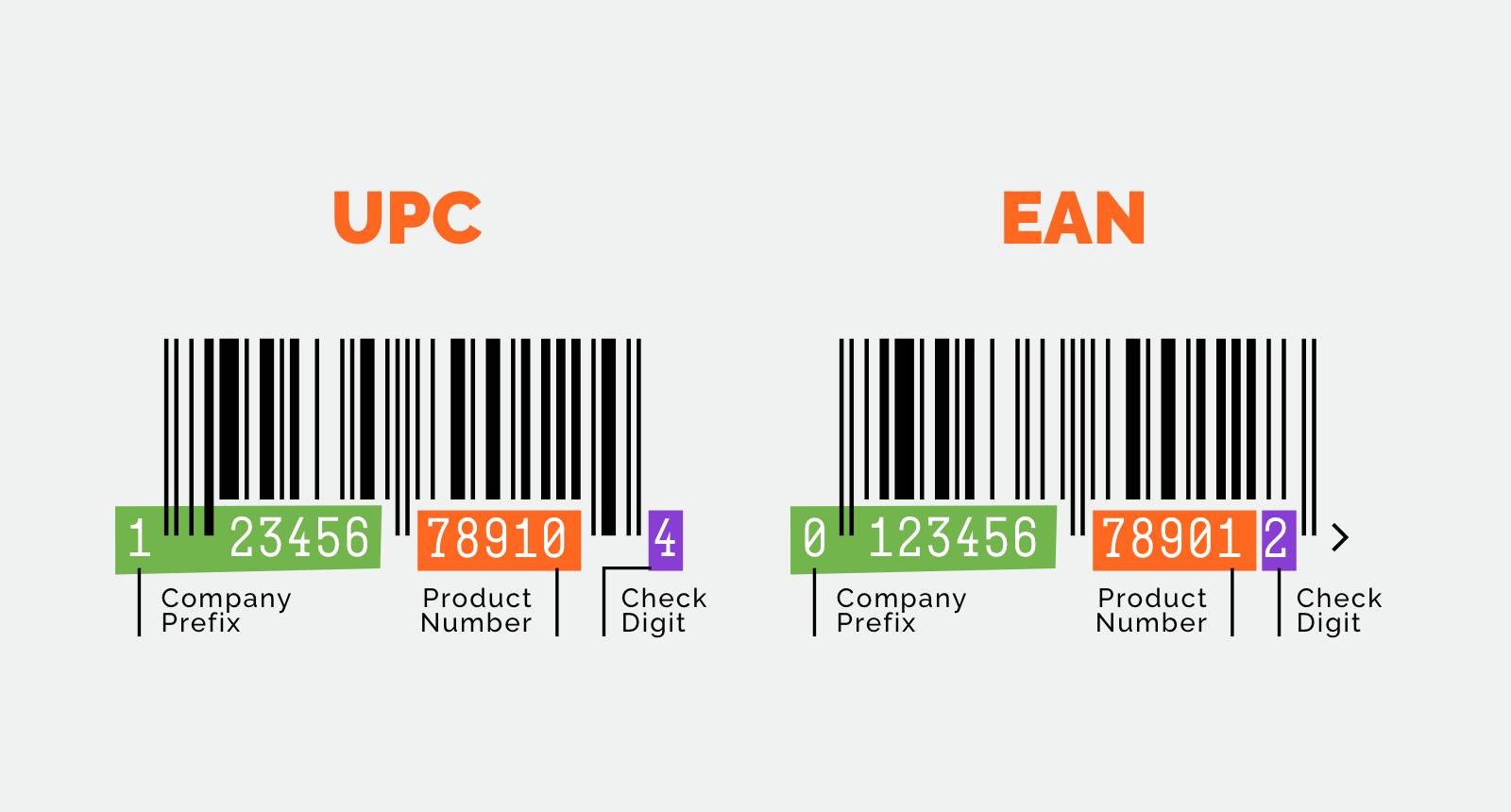
A GTIN (Global Trade Item Number) is the umbrella term for product identification numbers used globally. UPC and EAN are common ways GTINs are represented in retail contexts.
Think of a GTIN like a passport number for a product. The barcode is just the scannable visual encoding of that number.
Company prefix: why “ownership” questions exist
In GS1 systems, the “company prefix” is a block of numbers licensed to an organization that can then create GTINs from that allocation. This is why many validation systems look at the prefix and try to confirm who it is associated with.
If a marketplace or retailer verifies ownership by checking whether your brand is the license holder for that prefix, then it matters where your GTINs came from.
UPC and EAN: the formats you see most
UPC-A is a 12-digit, 1D barcode widely used in North America. EAN-13 is a 13-digit format commonly used internationally.
Many products use UPC on US packaging and EAN in international contexts. Providers like Bar Codes Talk commonly sell GTINs that can be used as UPC and EAN representations depending on your needs.
GTIN-14 and SCC: cases and logistics
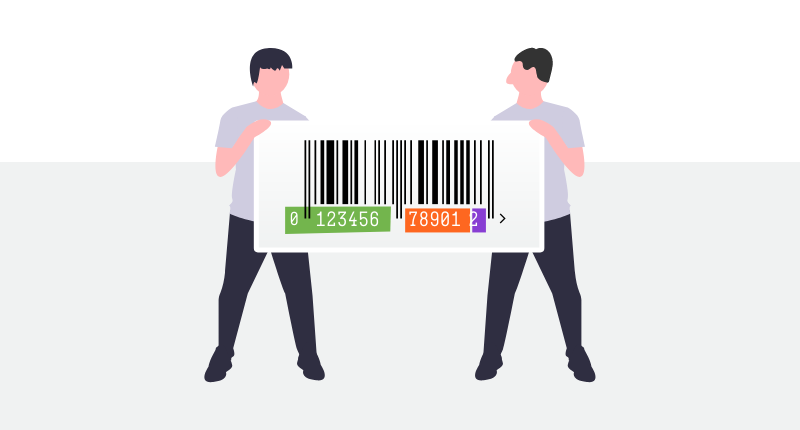
If you sell in cases (for example, cartons shipped to distributors), you may encounter GTIN-14, sometimes called SCC or case codes. Bar Codes Talk’s own lookup tool references GTIN-14 as part of its GEPIR search options.
Listing versus labeling: the Amazon confusion
One of the most common misunderstandings is assuming that the same barcode is used for everything.
- Listing often requires a GTIN (UPC/EAN) to create a catalog entry.
- FBA labeling can require Amazon-specific labels (FNSKU) depending on program rules.
Bar Codes Talk explicitly explains that Amazon may attach an ASIN and that FBA may require Amazon-provided barcode labels for inventory units, not just the manufacturer barcode.
Company background and positioning
Bar Codes Talk’s About page frames its mission as making barcodes simple—emphasizing that what used to take weeks now takes minutes. They also publish several scale claims, including:
- “Since 1996” positioning and “28+ years in business”
- “Over 200,000,000 barcodes sold”
- “Trusted by 200,000+ businesses”
- Headquarters in Brooksville, Florida
They also emphasize phone support, listing toll-free and international numbers and an email address.
Nuance worth noting: a separate Bar Codes Talk resource article describes the business as “founded in 2009” while still positioning them as serving a large customer base. You do not need to resolve this discrepancy to evaluate the product, but it is worth noting because some buyers use “years in business” as a trust heuristic.
What you receive when you buy from Bar Codes Talk
Bar Codes Talk is stronger than many alternatives because they do not treat “barcode purchase” as a single number. They treat it as a bundle of the number plus documents and assets that help you actually deploy it.
Based on their Terms of Service and resource documentation, a Bar Codes Talk purchase may include:
- A compressed download bundle
- A certificate of authenticity or ownership language
- A spreadsheet listing your assigned number(s)
- Barcode artwork, including vector and image formats
- References to GS1 specifications included in the bundle
- Instructions for printing and using barcode numbers
Their Terms of Service explicitly describes providing a compressed file with a certificate, GS1 General Specifications, and a spreadsheet listing assigned numbers. It also describes artwork formats and recommended printing approaches (laser printing, minimum resolution, black on white for contrast).
Their “10 reasons” resource article adds more detail about deliverables: it references a “Certificate of GTIN Assignment,” an Excel spreadsheet, and barcode images in JPG and EPS formats for UPC and EAN use cases.
BarcodestalkWhy this bundle matters
For many small businesses, the failure mode is not “I do not have a number.” The failure mode is operational:
- I have a number, but I do not have a properly sized barcode image for packaging.
- I do not know whether to use UPC or EAN.
- I do not know how to prove assignment when a platform flags my listing.
Bar Codes Talk’s packaging is clearly designed to reduce these problems.
The Bar Codes Talk GEPIR lookup tool: what it does and what to expect
Bar Codes Talk hosts a web-based lookup page labeled “Bar Codes Talk GEPIR” and defines it as a Global Electronic Party Information Registry search interface. The tool allows searching by barcode type (GTIN-12 UPC, GTIN-13 EAN, GTIN-14 SCC) and also by company name and GLN.
In practical terms, this is a “verification surface.” It gives you a place to point people to validate that a barcode is associated with a company name in Bar Codes Talk’s database.
Important nuance: not all systems check the same database. Even if your barcode is valid and correctly assigned in Bar Codes Talk’s system, other stakeholders may validate ownership through GS1-related registries or their own internal systems. Treat Bar Codes Talk’s lookup as helpful evidence, not a universal guarantee.
Bar Codes Talk also acknowledges “Amazon is its own system” in its Amazon-focused documentation and Terms, framing some issues as Amazon-specific rather than universal barcode failures.
Buying experience: what the process looks like
Bar Codes Talk’s positioning is very clear: pick quantity, purchase, and receive instant delivery. Their resource content explicitly states that once you decide how many barcodes you need, you can have them delivered to your inbox immediately.
In day-to-day operations, this matters because barcode acquisition is often on the critical path of packaging, listing, and onboarding.
Practical workflow
A typical buyer journey looks like this:
- Decide how many SKUs you will have in the next 6 to 18 months.
- Buy a block that covers current and near-term expansion.
- Download the bundle.
- Map each SKU to a GTIN and keep that mapping stable.
- Place the barcode on packaging (or include it on labels).
- Use the GTIN when creating listings and supplier documents.
Bar Codes Talk’s own resource content encourages buying a bit more than you need to keep barcodes in the same numeric series (primarily for organization and future additions). That advice is directionally sound, with one operational caveat: do not buy so many that you create unused identifiers that get lost. The real risk in barcode operations is not scarcity; it is misassignment.
BarcodestalkPricing: where Bar Codes Talk is most compelling
Bar Codes Talk wins on price clarity in a category where many sellers feel trapped by recurring fees.
Bar Codes Talk pricing signals
Bar Codes Talk’s resource article states:
- A single barcode purchase is $5
- Bulk purchases range from $2 each down to $0.15 each depending on quantity
- One time pricing with no renewal fees and no subscriptions
Price guarantees (positioning signal)
They also offer a “115% Best Price Guarantee,” stating they will beat a verified legitimate reseller’s price by 15%, with specific criteria for what qualifies as a legitimate reseller.
This matters because it shows how Bar Codes Talk wants to position itself:
- Grouped with “legitimate resellers,” not random barcode auction listings
- Using “pre-2002 GS1 US prefix origin” as a legitimacy requirement
- Reducing the reputation risk created by fraudulent barcode sellers in the market
Comparing to GS1 US pricing (why the economics are not just “cheap vs expensive”)
To evaluate Bar Codes Talk pricing fairly, compare it to GS1 US options. GS1 US publicly lists pricing examples on its site, including:
| GS1 US option (examples) | Initial fee | Annual renewal fee | Best for |
|---|---|---|---|
| 1 GS1 US GTIN | $30 | $0 | Single item / very small SKU count |
| 10 items needing a barcode/GTIN | $250 | $50 | Small product line with ongoing governance |
| 100 items | $750 | $150 | Growing catalog where prefix governance matters |
GS1 US also states the cost of licensing a company prefix starts at $250 and must be renewed annually.
A simple way to think about the economics
If you only need one or a handful of identifiers, Bar Codes Talk’s cost difference is significant relative to GS1 licensing.
But if you are building a brand where “prefix ownership in GS1’s ecosystem” will matter, GS1’s recurring fee can function like an insurance premium: you are paying for broad institutional acceptance.
The real economic question isn’t: “Which is cheaper?”
It’s: “Is paying recurring fees worth reducing acceptance risk in my target channels?”
Bar Codes Talk’s proposition is that for most small sellers, it is not.
The core question: are Bar Codes Talk barcodes legitimate and GS1 compliant?
This is the make-or-break question, and it is worth treating carefully.
What Bar Codes Talk claims
Bar Codes Talk repeatedly frames its numbers as “genuine GS1 US barcodes” and says they are registered with your company name for life, with no renewal fees.
They link this legitimacy to pre-2002 GS1 US prefixes and to a class action settlement. Their UCC Settlement page states that members who joined UCC (now GS1 US) prior to August 28, 2002 were entitled to perpetual membership with no renewal fees, and that the settlement allowed those members to keep using UCC-issued company prefixes without paying new annual renewal fees.
Their support article about renewal fees similarly frames their GTINs as coming from GS1 USA and that they can be “owned for life” with no renewal fees, contrasting this with GS1’s current licensing model.
BarcodestalkWhat that means in practical risk terms
Even if an identifier is structurally valid and scans properly, there are two separate legitimacy tests that matter:
- Syntax validity: does the number follow GTIN structure rules and scan correctly?
- Ownership validity in a specific ecosystem: does the platform or retailer accept that your brand has the right to use that number, based on how they validate prefixes and company name mappings?
Bar Codes Talk is largely addressing the second test by providing certificates, a lookup registry, and documentation about pre-2002 prefixes.
However, Bar Codes Talk also acknowledges in its Terms of Service that some retailers may not accept GTIN numbers issued through them because they were not purchased directly from GS1.
The honest crux: most failures in 2025 are policy failures, not scanning failures.
Compatibility and retailer acceptance: the real tradeoff
Bar Codes Talk’s About page claims “universal compatibility” and explicitly names Amazon, Walmart, Target, and worldwide retailers.
But their Terms of Service takes a more cautious stance: it states that some retailers may not accept GTIN numbers issued by Bar Codes Talk because they are not purchased directly through GS1 and provides a list of examples under “GS1 Required” and “May require,” including several major retailers.
This is not necessarily a contradiction. It reflects two realities:
- In many contexts, a GTIN that scans and is not duplicated will work operationally.
- In some contexts, onboarding rules explicitly demand GS1 licensing in the brand’s name.
How to decide based on your go-to-market plan
Bar Codes Talk is more likely to fit if:
- You are primarily selling direct-to-consumer.
- Your early distribution is marketplaces and small retailers.
- You need a small number of barcodes quickly.
- You want to avoid ongoing membership renewals.
- You value having phone support and a clear support library.
GS1 licensing is more likely to fit if:
- You are planning to pitch major retailers that explicitly require GS1-issued identifiers purchased directly and tied to your company prefix.
- You expect supply chain programs where product data synchronization and formal governance matters.
- You want the simplest “no debate” compliance posture when a platform runs prefix ownership checks.
Bar Codes Talk’s Terms list is a useful prompt. If you see your target retailer in the “GS1 Required” group, take that seriously.
Amazon: a detailed look, including the March 31, 2026 barcode and commingling changes
If you buy barcodes primarily for Amazon, you need to think in three layers:
- Catalog creation: GTIN requirements and GTIN exemptions
- Brand rules: Brand Registry constraints and edge cases
- Fulfillment labeling: FBA sticker requirements versus manufacturer barcodes
Bar Codes Talk invests heavily in Amazon-specific guidance because it is where most barcode confusion and policy friction happens.
Barcodestalk1) Catalog creation and GTIN exemptions
Amazon’s own “Sell on Amazon” guidance describes how to list without a GTIN:
- First check if your product is already in the catalog.
- If not, you may be eligible for a GTIN exemption.
- Amazon outlines a process inside Seller Central during listing creation, including the “I don’t have a product ID” path and submitting images.
This matters because some new sellers assume they must buy a GTIN, when in some cases Amazon will allow an exemption.
2) Brand rules and Brand Registry edge cases
Bar Codes Talk’s Amazon-specific documentation calls out that some major brands have agreements that prevent third-party sellers from listing products using those brand names, and that valid GTINs may still be blocked if they do not match the brand’s range. They also discuss Brand Registry-related GTIN requirements as a special case affecting a small subset of sellers.
Treat these as Amazon program rules, not barcode validity rules. In other words, you can have a valid GTIN and still be blocked due to brand enforcement.
3) Fulfillment labeling: the March 31, 2026 change you need to plan for
Amazon announced in its Seller Central forums that commingling practices will end effective March 31, 2026 and described barcode labeling consequences:
- Brand owners with the Brand Representative selling role in Amazon Brand Registry will no longer need to apply Amazon barcode stickers for products that already have manufacturer barcodes.
- Resellers not enrolled in Brand Registry as a Brand Representative selling role will be required to use Amazon barcode stickers even if the product has a manufacturer barcode.
- For products without a manufacturer barcode, both brand owners and resellers will need Amazon barcode stickers.
Operational implication: labeling requirements become more dependent on your seller role and Brand Registry status. This shifts some “barcode pain” from GTIN acquisition to FBA labeling workflows.
How this impacts a Bar Codes Talk buyer
If you are buying GTINs primarily for Amazon, the 2026 changes do not necessarily mean you should not buy GTINs. It means you should be precise about your objectives:
- If you need a GTIN to create a listing, that is still a catalog requirement problem.
- If you need FBA labeling compliance, that may become an Amazon barcode sticker workflow problem depending on your seller role and brand registry status.
Bar Codes Talk’s Amazon page explains that after you use the UPC or EAN to create the listing, Amazon attaches an ASIN and for FBA, Amazon can provide an FNSKU barcode label that you may need to apply to packaging.
A sensible approach:
- Use Bar Codes Talk GTINs when you need a product ID for listing creation and do not want GS1 licensing overhead.
- Plan for FBA sticker workflows if you are a reseller or if Amazon program rules require it for your seller role.
The “Works for Amazon Guarantee”: what it covers and what it does not
Bar Codes Talk maintains a dedicated “Works for Amazon Guarantee” article updated December 8, 2025. The key idea:
- They cannot prevent third parties from duplicating or misusing barcodes.
- If your numbers are fraudulently used on Amazon or Amazon flags them due to internal conflicts, duplication, or misuse, Bar Codes Talk says it will work to ensure you can list successfully.
- They state they may replace affected barcodes or offer a refund depending on the percentage of unusable barcodes once verified.
- They frame these as Amazon-specific issues affecting less than 1% of sellers.
As guarantees go, this is more concrete than most reseller promises because it acknowledges the real failure mode: Amazon catalog conflicts and misuse.
BarcodestalkImportant limitation: a reseller guarantee does not override a retailer’s policy. If your target channel demands GS1 licensing for your brand, a guarantee does not change that requirement.
Documentation and support: one of Bar Codes Talk’s biggest strengths
Barcode sellers often fail at education. They assume you already understand GTINs, prefixes, and listing rules. Bar Codes Talk does the opposite: they publish an extensive support library and resource articles that anticipate common confusion.
Examples of what they cover:
- “Will my bar code work with Amazon and other online retailers?”
- Amazon-specific usage folders and error message explanations
- Explanations of renewal fees and comparisons with GS1
- Registration and company name visibility questions
- Printing guidance, file formats, and packaging workflows
Their support content is visibly maintained, with multiple Amazon-related articles updated in 2025.
Contactability
Bar Codes Talk’s About page claims phone responsiveness and lists phone and email contacts. Their support documentation repeats contact options and includes a ticket submission workflow.
In a category where sellers often panic at the first marketplace rejection, that matters.
Trust signals and user sentiment: what real customers say
No review is complete without looking at third-party feedback, with the standard caution that online reviews are imperfect and can skew toward extremes.
Trustpilot
Trustpilot includes Bar Codes Talk reviews that repeatedly reference:
- Speed and ease of ordering
- Perceived legitimacy and trust
- Helpful customer service interactions
- Good pricing
The page also shows examples where the company replies, and many reviews are labeled “Invited,” which typically means they were requested through a review invitation system.
Better Business Bureau (BBB)
The BBB profile includes mixed feedback, including at least one reviewer describing it as inexpensive and “legitimate,” and another reviewer alleging it is a scam and that codes were already used by other companies.
This polarity is common in the barcode reseller market because:
- Some buyers confuse product databases vs prefix registries and assume “my company doesn’t show in an app” means the code is invalid.
- Some buyers hit Amazon catalog conflicts and assume the code itself is invalid.
- Some buyers have previously purchased from less legitimate sellers and generalize mistrust to the entire category.
The most responsible way to use these reviews is not to average star ratings. It is to identify recurring themes:
- When things go well, buyers value speed and cost.
- When things go poorly, the pain is usually “platform acceptance” or “ownership verification” in a specific ecosystem.
Bar Codes Talk’s own documentation focuses heavily on these exact failure modes, which is generally a good sign.
BarcodestalkStrengths and limitations (the practical pros/cons)
Strengths: where Bar Codes Talk stands out
- Clear economic value for small SKU counts: the $5 per code claim (and bulk pricing) is compelling if you only need a few identifiers.
- A deliverables bundle designed for real operations: compressed bundle, spreadsheet mapping, certificates, and usable artwork formats.
- Better education than most barcode providers: extensive support library, heavily focused on Amazon (where most friction occurs).
- Policy candor in Terms of Service: explicitly states some retailers may not accept reseller-issued GTINs because they are not purchased directly from GS1.
- Guarantees mapped to real failure modes: Amazon catalog conflict/misuse acknowledgment + price guarantee positioning.
Limitations and risks: what you should go in knowing
- Retailer acceptance is not only about scanability: large retailers and supply chain programs can have strict “GS1 direct” onboarding rules. Bar Codes Talk states it will not refund purchases if a third party fails to accept the numbers.
- Marketplace policies evolve: Amazon’s March 31, 2026 commingling/labeling changes are a good reminder that operational rules can shift quickly.
- Ownership verification depends on what database a platform uses: Bar Codes Talk provides certificates and a registry lookup, but platforms may validate prefix ownership differently.
- Barcodes are non-returnable by design: their Terms state GTIN, UPC-A, and EAN-13 numbers cannot be returned due to uniqueness requirements.
A decision framework you can use in 5 minutes
If you want a practical way to decide, use this.
Step 1: Clarify your channel priorities for the next 12 months
Pick the dominant path:
- Marketplace first (Amazon, Etsy, Shopify, eBay)
- Direct-to-consumer with occasional wholesale
- Big box retail and large distributors as a near-term target
If you are in the first two groups, Bar Codes Talk often fits. If you are in the third group, GS1 often reduces friction.
Step 2: Identify your acceptance bottleneck
Ask: what is the real reason you need the barcode?
- Packaging requires a scannable symbol
- Marketplace listing requires a product ID
- Distributor onboarding requires GS1 licensing in your name
- FBA requires unit labels
Only one of these is solved by buying a barcode number. FBA labeling may require Amazon barcode stickers regardless of your GTIN strategy.
Step 3: Decide whether GS1 licensing is a requirement or a preference
GS1 US pricing is transparent and scalable and is designed to create official identity through a company prefix license.
If your partners require that, treat it as non-negotiable. If they do not, Bar Codes Talk’s one time pricing can be a rational choice.
Step 4: Buy enough to stay organized but not enough to get sloppy
Buying slightly more to keep a contiguous series can be useful if (and only if) you maintain disciplined SKU mapping and documentation.
BarcodestalkHow Bar Codes Talk compares to GS1 US in plain language
Here is the simplest honest comparison.
Bar Codes Talk
- Lower cost per identifier for small volumes (based on their published pricing claims)
- No recurring fees through Bar Codes Talk
- Instant delivery + ready-to-use deliverables bundle
- Strong support content geared toward marketplaces (especially Amazon)
- Some acceptance risk in channels that require GS1 direct licensing
GS1 US
- Official issuer and standards organization in the US ecosystem
- Pricing includes one-time single GTIN options and recurring company prefix licensing tiers
- Strong acceptance posture for large retail and supply chain programs
- Additional tooling for product data workflows (for example, Data Hub) depending on your package/membership
| Decision hinge | Prefer Bar Codes Talk when… | Prefer GS1 US when… |
|---|---|---|
| Primary channel | Marketplaces + DTC + small retail | Major retailers / distributor programs with strict GS1 rules |
| Risk tolerance | You can tolerate occasional verification friction and want speed/cost | You want “no debate” compliance posture on prefix ownership checks |
| Budget model | One-time cost preference (avoid renewals) | Recurring governance cost is acceptable (and desirable) |
If you want the lowest friction story when a retailer says “we require GS1,” GS1 is the safer answer. If you want speed and cost efficiency for a small set of SKUs in the online seller world, Bar Codes Talk is often a pragmatic answer.
Final verdict and recommendations
Bar Codes Talk is best understood as an operational shortcut for small sellers who need legitimate, usable GTINs quickly without committing to ongoing fees. Their real advantage is not only price. It is packaging: they give you the files, documents, and guidance that most first-time barcode buyers need.
At the same time, Bar Codes Talk is unusually honest about the limits. Their Terms explicitly warn that some retailers may refuse reseller-issued GTINs because they are not purchased directly from GS1 and that they do not refund based on third-party acceptance.
If you are building a brand that expects to move into major retail or strict distributor programs, the cleanest path remains GS1 licensing. GS1 US publishes its pricing tiers clearly, including a $30 single GTIN option and company prefix licensing starting at $250 with annual renewal fees for many tiers.
If you are early stage, selling online, and want a fast, one time cost solution with strong guidance, Bar Codes Talk is one of the more credible and better documented options in the reseller landscape.
BarcodestalkFAQ (15 questions)
1) Will Bar Codes Talk barcodes scan at retail checkout?
If printed correctly and placed properly, the barcode symbol should scan because it is a standard encoding of a GTIN. Bar Codes Talk also provides printing guidance (for example, high contrast black on white and minimum print resolution recommendations).
2) Do I own the barcode numbers I buy from Bar Codes Talk?
Bar Codes Talk explicitly states that you legally own the GTINs you purchase and provides certificate language to that effect.
3) Are there renewal fees?
Bar Codes Talk states there are no renewal fees through them. Their support content contrasts their one time pricing with GS1’s recurring licensing model.
4) Can I return a barcode if I change my mind?
Their Terms of Service states GTIN, UPC-A, and EAN-13 numbers are not returnable due to the nature of the goods and uniqueness requirements.
5) Will my company name show up when someone scans the barcode?
Not always. A barcode encodes a number. Whether an app shows your company name depends on what database that app uses and whether your product data is present there. Bar Codes Talk provides its own GEPIR lookup and says it registers your company name for life in its system.
6) Will my barcode work on Amazon?
Bar Codes Talk claims broad Amazon usability and provides Amazon-specific guidance and an Amazon-focused guarantee for certain issues.
7) If Amazon flags my barcode, what happens?
Bar Codes Talk’s Works for Amazon Guarantee states they will work to ensure you can list successfully and may replace affected barcodes or offer a refund depending on the verified scope of the issue.
8) Do I need a GTIN if I can get a GTIN exemption?
Possibly not. Amazon’s own guidance explains that if your product does not have a GTIN, you may be eligible for a GTIN exemption and outlines a process for applying during listing creation.
9) What is changing on Amazon in 2026?
Amazon announced that commingling practices will end effective March 31, 2026 and that barcode sticker requirements will change based on seller role and Brand Registry status.
10) Will Bar Codes Talk barcodes work at Walmart, Target, and major retailers?
Bar Codes Talk claims broad compatibility, but their Terms also list retailers that may require GS1-issued numbers purchased directly and says some retailers may not accept reseller-issued GTINs.
11) How many barcodes should I buy?
Bar Codes Talk suggests buying slightly more than you need to keep numbers in the same series. This is reasonable if you have disciplined SKU tracking and keep your GTIN-to-SKU mapping stable.
12) Do I need UPC or EAN?
It depends on where you sell. UPC-A is common in North America, while EAN-13 is common internationally. GTIN is the umbrella concept.
13) What file formats do I get?
Their Terms of Service describes artwork in vector format and JPG, and a compressed file bundle that includes a spreadsheet and related documents.
14) What is Bar Codes Talk GEPIR used for?
It is a lookup tool that allows searching by GTIN type and by company name or GLN, functioning as a registry interface for verification in Bar Codes Talk’s ecosystem.
15) If I want the most universally accepted approach with minimal debate, what should I do?
If your partners or target retailers require GS1 licensing directly, GS1 US publishes pricing tiers for single GTINs and company prefix licensing. Choosing GS1 reduces policy friction in environments that validate prefix ownership through GS1 licensing.


By clicking Sign In with Social Media, you agree to let PAT RESEARCH store, use and/or disclose your Social Media profile and email address in accordance with the PAT RESEARCH Privacy Policy and agree to the Terms of Use.