
Finale Inventory Review: Deep Dive into Features, Pros, and Real-World Warehouse Performance
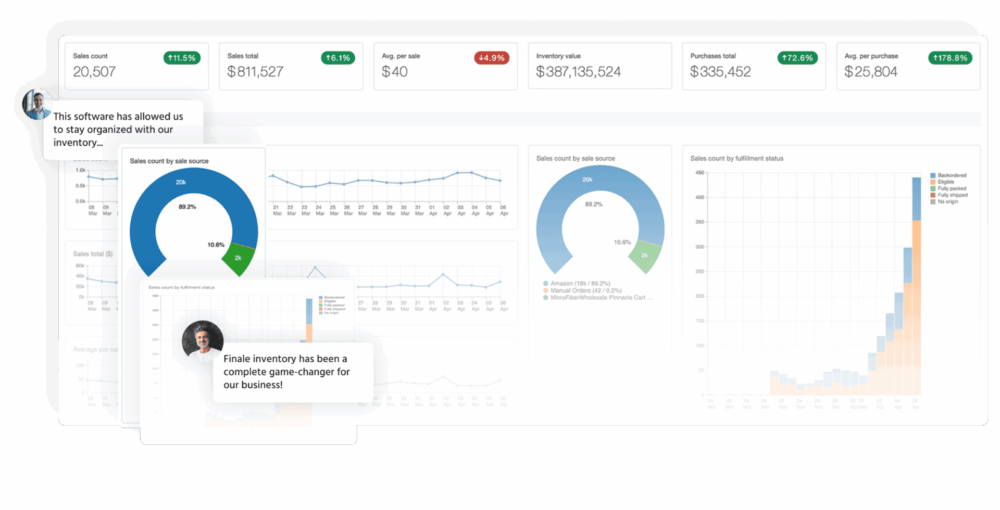
If you have ever tried to keep inventory accurate across Amazon, Shopify, a wholesale channel, and a warehouse team that moves fast, you already know the truth.
Inventory problems rarely look dramatic at first. They look small. One oversold SKU. One late purchase order. One return that never got booked back in. One customer who swears you shipped the wrong lot.
Then the small stuff stacks up.
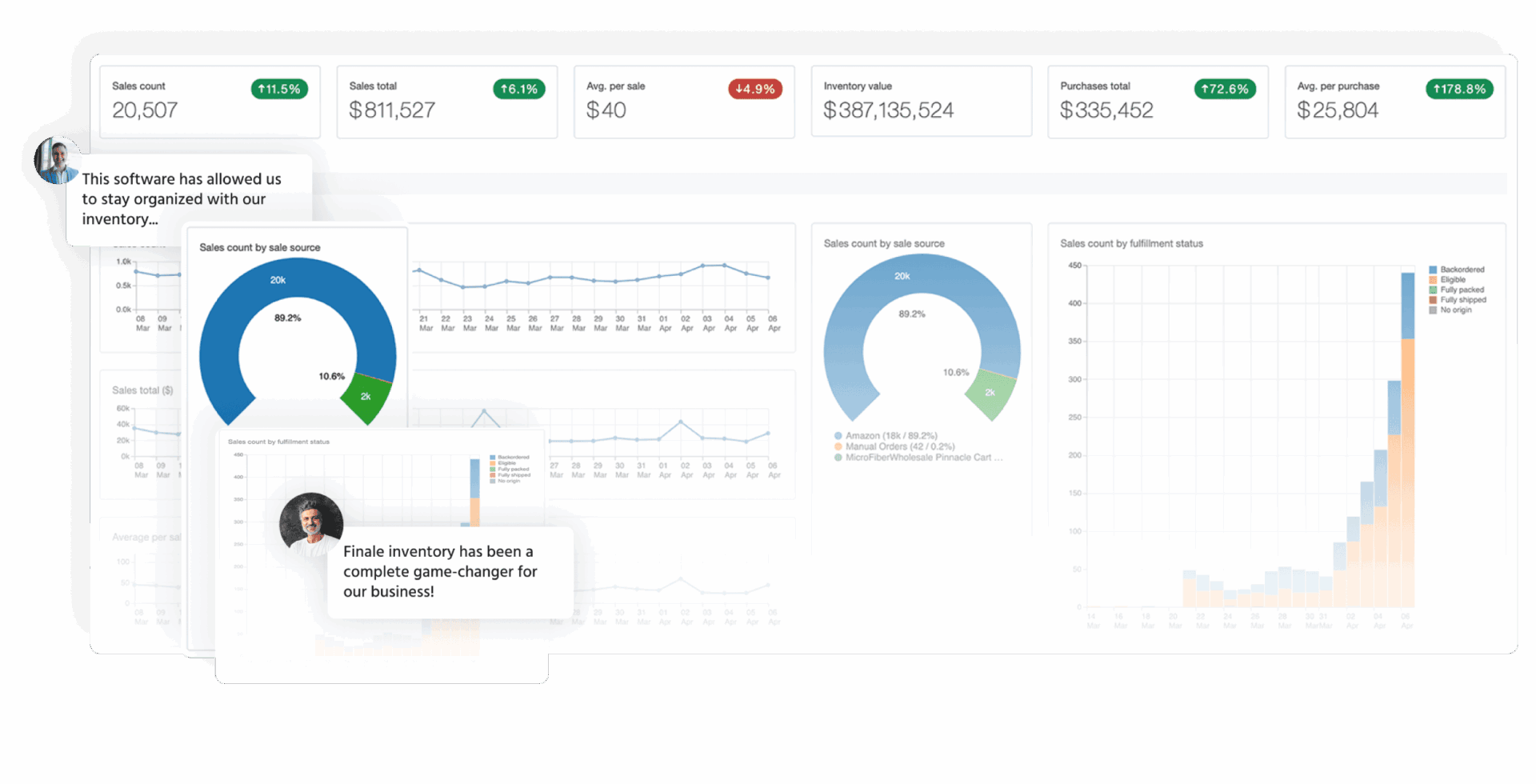
Finale Inventory positions itself as a cloud-based, multichannel inventory management system built for scaling ecommerce operations, with a serious focus on operational workflows like procurement, barcode-driven warehouse work, and real-time sync across sales channels.
This review is long on purpose. Inventory software deserves that kind of attention. It touches revenue, cash, customer experience, and team sanity all at once.
Finale InventoryOverall verdict (short version): 8.7/10
Best for: growing ecommerce sellers and hybrid sellers (DTC + marketplaces, or ecommerce + wholesale) that need multi-warehouse accuracy, barcode-based fulfillment, and connectors to sales channels and accounting tools. Finale leans into operational control and workflow flexibility.
Not ideal for: very small sellers who only need basic stock counts, or companies that want a full ERP suite with deep manufacturing, HR, and complex finance in one product. Finale can cover light manufacturing and strong warehouse workflows, but it is not trying to be NetSuite.
Finale Inventory
Finale Inventory is a cloud-based inventory management system that is easy to understand, affordable, and adaptable to the needs of the user’s business. Finale supports barcoding, QuickBooks, serial number tracking, lot id tracking, multi-channel e-commerce (including ShipStation inventory management), multi-locations, and a broad range of features for warehouse and ecommerce applications. Finale is designed to support a wide range of inventory management applications for warehouse management and multi-channel ecommerce inventory customers. Finale Inventory has integration to many selling platforms including eBay and Amazon, and will mitigates the headaches due to overselling. Finale will automatically update the selling channels every five…
• Inventory Management
• Order Management
• QB Desktop and Online Integration
• Lot ID Tracking
• Serial Number Tracking
• Kitting / Product Bundling for eCommerce
• Builds for Light Assembly or Light Manufacturing
• 3rd Party Add-Ons and Integrations
• Bronze - $149/month or $1500 paid annually
• Silver - $225/month or $2250 paid annually
• Gold - $299/month or $3000 paid annually
• Platinum - $449/month or $4500 paid annually
• Custom - Call
• Inventory Management
• Order Management
• QB Desktop and Online Integration
• No software to install
• Integration to multiple selling platforms
• Support High Transaction Volumes
Here’s what this review covers
- What Finale Inventory is (in plain terms)
- Company background (and what the Descartes acquisition likely means)
- Pricing reality check (and how to budget despite conflicting numbers)
- Setup and onboarding (what you should expect)
- Core capabilities (inventory, purchasing, multichannel sync, warehouse ops)
- Barcoding + picking workflows (including wave picking)
- Reporting, customization, API, and EDI integrations
- Accounting fit (especially QuickBooks Online)
- Reliability and security posture (trust signals)
- Support and learning resources
- Pros and cons
- Alternatives and comparisons
- Who should choose Finale (and who should pass)
- Final thoughts and recommendation
- FAQ (15 questions)
What Finale Inventory is, in plain terms
Finale Inventory is a cloud inventory management platform designed to keep stock accurate across multiple channels and multiple locations. It blends three big jobs into one system:
- Inventory management: stock levels, lots/serials, returns, audits/cycle counts
- Order + warehouse operations: picking/packing, barcode scanning workflows
- Purchasing and replenishment: purchase orders, reorder logic, forecasting
On its pricing page, Finale highlights capabilities like multi-warehouse inventory control (stock audits, stock takes, cycle counts, lot ID and serial tracking, returns), ecommerce inventory management with FBA support, kitting/bundling, and wave picking.
It also positions itself as integration-heavy, calling out 40+ integrations (Shopify, Amazon, Walmart, QuickBooks, and more), plus API and EDI access.
Quick naming note: You will see “Finale Inventory” and “Descartes Finale” in different places across the ecosystem (including on product pages, app listings, and legal footers). In practical terms, it’s the same product family.
Company background: the Descartes acquisition is a real signal
On August 4, 2025, Descartes Systems Group announced it acquired Finale Inventory, describing Finale as a U.S.-based provider of cloud inventory management solutions for ecommerce businesses across their growth lifecycle.
Descartes disclosed the deal structure as approximately US $40 million upfront, with a potential earn-out up to US $15 million based on performance targets.
What that means in practice
Acquisitions can be scary in software. Prices change. Roadmaps shift. Support quality can wobble.
But Descartes is not a random buyer. They are a logistics and commerce software group, and they framed Finale as part of a broader ecommerce solution suite.
My read: this acquisition is more likely to push Finale “upmarket” than to freeze it. That can be good if you want long-term stability and deeper logistics integration. It can be annoying if you loved a small-vendor feel and low starting price.
Keep that tension in mind when we get to pricing.
Pricing and plans: what is public, what is confusing, and how to budget anyway
Let’s be blunt: Finale pricing can look inconsistent depending on where you read.
Finale InventoryWhat Finale’s own pricing page says
Finale’s pricing page states:
- Plans start from $499 per month
- Pricing is based on users, integrations, order volume, and add-ons
That is a quote-driven shape, even if a starting price is listed.
What third-party listings may show
TrustRadius lists four pricing editions:
| Edition | Listed price (per month) |
|---|---|
| Bronze | $99 |
| Silver | $275 |
| Gold | $449 |
| Platinum | $649 |
You may also see older tier names and older pricing referenced across the web.
Why this happens
There are a few likely reasons (and more than one can be true at once):
- Legacy plans vs. new plans: some customers stay on older tiers while new customers land on updated packaging.
- Different bundles by volume: Finale explicitly says pricing depends on order volume and integrations, which implies the base price can shift.
- Acquisition effects: post-acquisition, vendors often simplify pricing or reposition.
Practical advice: don’t waste energy trying to reconcile every public number. Use public sources to understand the pricing logic, then confirm your real quote using your order volume, channel count, warehouse count, and barcoding needs.
A practical budgeting model
Here is a simple way to think about Finale cost without getting trapped in pricing fog.
Cost drivers that usually move a quote up:
- More users who need access (warehouse + ops + purchasing + finance)
- More integrations that need monitoring and support
- Higher order volume per month (especially high-velocity DTC)
- Barcode module usage and advanced picking workflows
- EDI needs (wholesale into retailers with strict requirements)
Feature gating signals to confirm early
- The barcode scanning Android app notes that accounts must have the Gold plan or above to use the barcode scanning application.
- Treat accounting and channel integrations as “confirm early” items, especially if your month-end close depends on clean inventory valuation and COGS.
Setup and onboarding: what you should expect
Finale lists onboarding and support elements directly on the pricing page, including:
- Personalized setup help
- Virtual training sessions with screen sharing
- Support options including email, phone, and Zoom
- Dedicated account manager
On the Contact page, Finale also states they respond in less than 15 minutes during standard business hours.
The real setup work is not the software
This is the part most teams underestimate.
Finale can guide you. It can train you. It can give you flexible screens and custom fields.
But you still need to answer questions like:
- What is your source of truth for SKUs and aliases?
- Which locations matter, and how granular should bins be?
- When you say “available,” do you mean on-hand, available-to-promise, or net of pending orders?
- How do returns flow back in, and who owns the process?
- Who is allowed to edit costs, adjust stock, or close purchase orders?
If you already have discipline here, Finale will feel like it is giving you superpowers. If you do not, Finale will still work, but you will feel every gap.
Core capabilities: inventory, purchasing, multichannel sync, warehouse operations
1) Centralized inventory management (multi-warehouse control)
Finale’s pricing page explicitly lists multi-warehouse inventory capabilities including stock audits, stock takes, cycle counts, lot ID and serial number tracking, and returns management.
This is the foundation. If it is wrong, everything else is theater.
Lot and serial tracking in real life
Lot/serial tracking is not a fancy feature. It is a survival feature in categories like supplements and food, cosmetics, electronics (serials/warranty), regulated products, and any business that deals with expiration, recalls, or batch-specific issues.
If you need this, validate details in a demo:
- Partial picks from a lot
- Lot selection rules (FIFO vs. FEFO)
- Returns back into the same lot
- Customer traceability reports
2) Ecommerce + multichannel inventory management
Finale puts multichannel front and center (FBA support, integrations, real-time stock syncing, kitting/bundling, alias SKUs, wave picking).
In practice, the value is simple: you want one stock truth, not four competing truths.
Aliases and real warehouses
Alias SKUs sound small until you face them.
You sell a bundle. Amazon calls it one SKU. Shopify calls it another. Your supplier calls it something else. Your warehouse labels it differently.
If barcodes do not map cleanly to the right product identity, scanning workflows fall apart. Finale explicitly calls out alias and barcode-related capabilities, which is a meaningful signal for real warehouses.
3) Procurement and replenishment
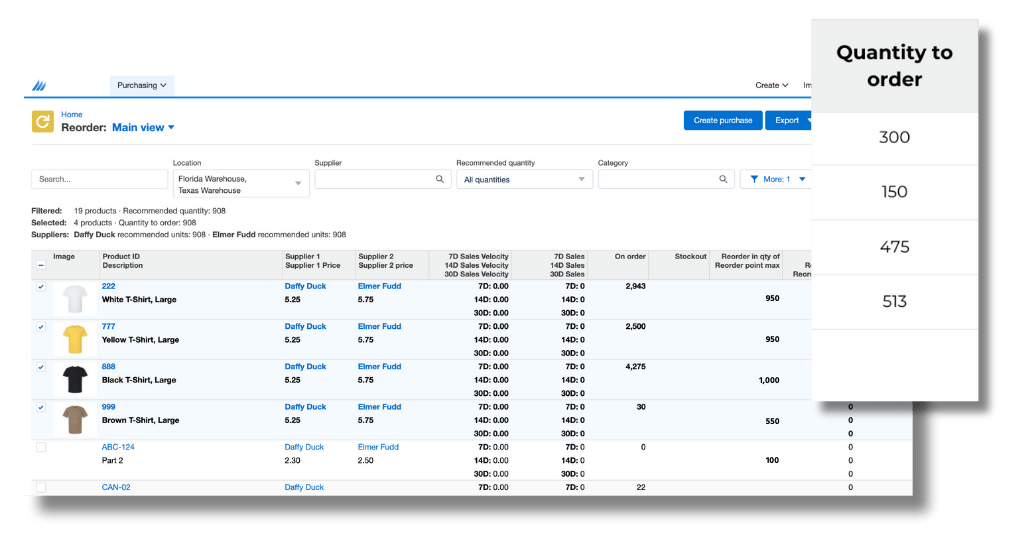
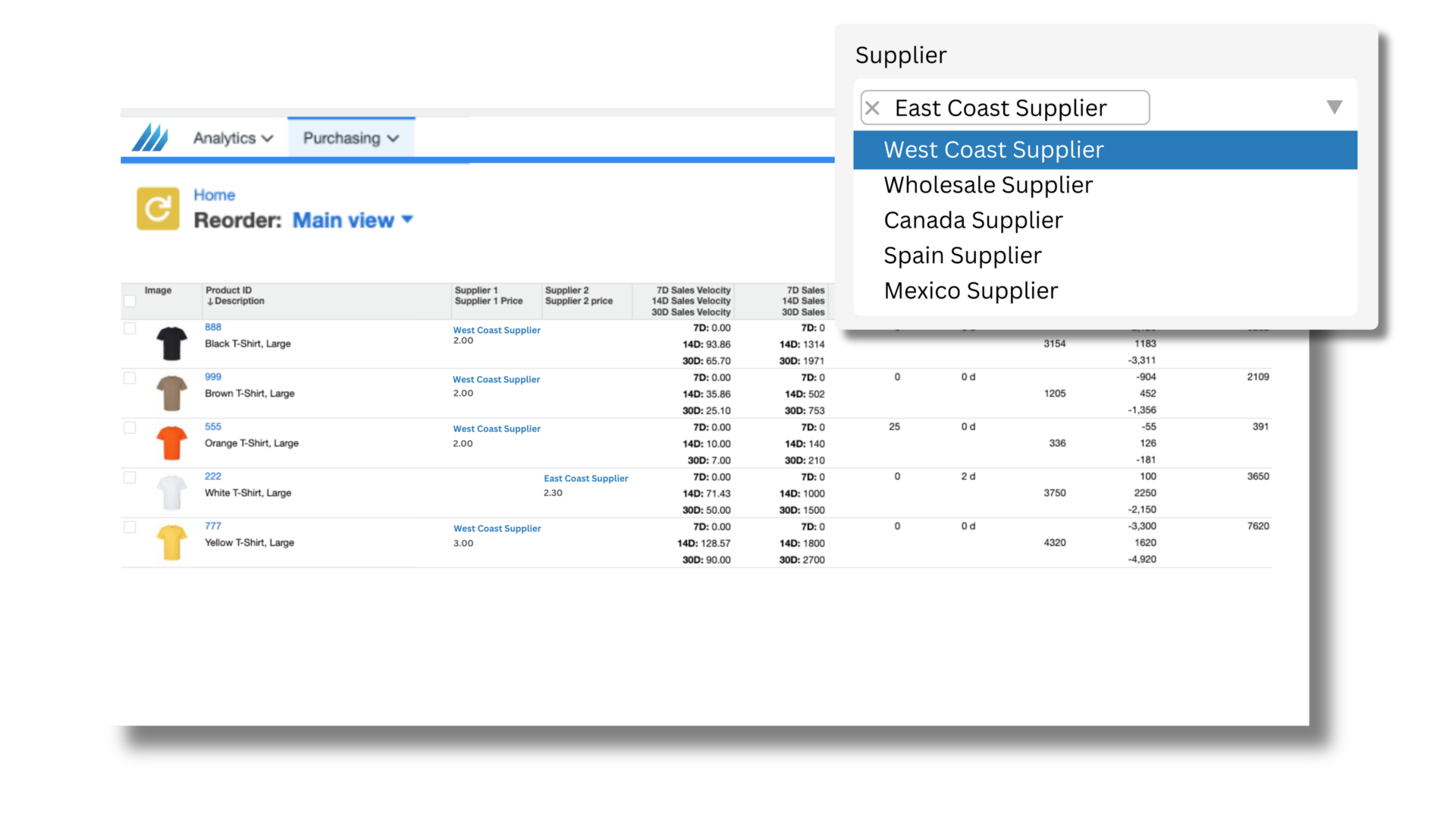
Finale lists procurement and replenishment features including automated purchase orders, min–max reordering, sales velocity forecasting, projected arrival date, three-way matching, and transfers.
That is a serious procurement stack for a platform that is primarily known as ecommerce inventory software.
Why sales velocity forecasting matters
Reorder points are easy when demand is stable. They are painful when demand spikes, seasonality hits, or promotions distort patterns.
The phrase “sales velocity forecasting” is not a guarantee of smart demand planning. It is a signal that Finale is thinking in that direction. If you live in spreadsheets now, even moderate improvement is noticeable.
4) Financial reporting and inventory valuation
Finale lists reporting that includes asset valuation, sales income, COGS, and landed cost calculation, with exports to Excel, Google Sheets, and other BI tools.
This is one of the most important sections to validate if finance is involved in your buying decision. Inventory valuation is where many implementations break down, because warehouse teams work in units, purchasing works in lead times, and finance works in dollars and audit rules.
5) Customization and attachments
Finale calls out customizable labels, reports, and documents with unlimited custom fields, plus screen layouts customizable per user. It also supports attachments and documents tied to objects like purchase orders and sales orders.
Attachments sound boring until you need supplier invoices tied to a PO, compliance documents tied to a lot, photos tied to a damaged return, or freight paperwork tied to receiving.
The warehouse side: barcode scanning, picking, and what makes Finale stand out
A lot of inventory tools can tell you what you have. Fewer tools help your team move through a warehouse with speed, accuracy, and repeatability.
Finale’s pricing page highlights a “Barcode WMS Module” that includes mobile barcode scanning, advanced picking methods (wave picking, batch picking, pick & pack), lot/expiration tracking, label printing (including QR codes), and employee pick efficiency reporting.
Finale InventoryThe barcode scanner app: what it includes
On Google Play, Finale IMS Barcode Scanner describes itself as a barcode solution designed to increase warehouse productivity and count accuracy. It also notes that Finale accounts must have the Gold plan or above to use the barcode scanning application.
Listed workflows include receiving PO shipments, cycle counting, stock adjustments, transfers, sales order picking, discrete order picking, batch order picking (wave picking and pick & pack), serial tracking, lot tracking, and multi-location support.
Wave picking: Finale explains the workflow clearly
Finale defines wave picking as combining similar orders into a batch and pulling inventory for all orders simultaneously to reduce the number of picking trips.
More importantly, Finale describes operational details that separate “marketing wave picking” from usable wave picking:
- Pick and pack multiple orders in a single trip
- Create consolidated lists showing how many units of a SKU are required
- Directed picking on the scanner to sequence picks vs. picking one order at a time
- Scanner confirmations and warnings for correct/incorrect scans
- Tote/bin slotting where each order is assigned a tote and the scanner tracks placement
Employee pick efficiency reporting
Finale calls out employee pick efficiency reporting to track and analyze picking productivity.
Operational note: used well, pick reporting helps you spot training gaps, layout problems, and process bottlenecks. Used badly, it becomes a blunt scoreboard that annoys good workers. Implement it as a process-improvement tool first.
Labels and barcode printing (the “small” detail that prevents big mistakes)
Finale highlights barcode label printing and customizable label content (barcode types, images, rule-based text, UPC/QR/EAN, serials, lot IDs, bins, and warehouse locations).
If your warehouse is growing, you will change layout, add bins, add locations, and introduce new workflows. Label flexibility prevents awkward compromises as you evolve.
Reporting and data access: where Finale looks unusually strong
Finale’s developer documentation is worth paying attention to even if you are not a developer, because it tells you what kind of product this is under the hood.
A “built like a platform” signal
Finale’s developer documentation notes that the Finale API can access and modify every entity exposed in the user interface, and that the UI itself uses the API for its operation.
That usually correlates with consistency: the UI and automations are using the same underlying services.
Core API posture: REST + GraphQL
Finale’s API documentation states it is REST-based, uses JSON over HTTPS, and uses GET for reads and POST for modifications. Finale also provides GraphQL API documentation.
Reporting API: a practical approach for analytics teams
Finale’s Reporting API documentation notes that the simplest approach to retrieve information is often to run a report and retrieve results in CSV or JSON. It also states the Reporting API has access to almost all data in the system and can produce results that are easier to process than other endpoints.
This matters if you want:
- scheduled exports into a data warehouse
- dashboards in a BI tool
- custom KPIs and reconciliation reporting
- automation without brittle screen-scraping
EDI integrations
Finale’s pricing page and EDI integrations page reference EDI connectivity via partners such as SPS Commerce, Crstl, and Syncware, plus a custom integration path via the open API.
If you are doing wholesale, retail compliance, or 3PL work where structured documents and routing guides are mandatory, this is a meaningful capability.
Accounting fit, especially QuickBooks Online
Finale’s QuickBooks integration page states that the QuickBooks Online integration synchronizes inventory valuation, bills, sales, invoices, COGS, and other financial data to provide a unified view across the business.
If you are on QuickBooks Online and you have outgrown basic inventory, this matters. It can reduce the monthly scramble where someone exports data, someone else edits it, and everyone hopes the numbers tie out.
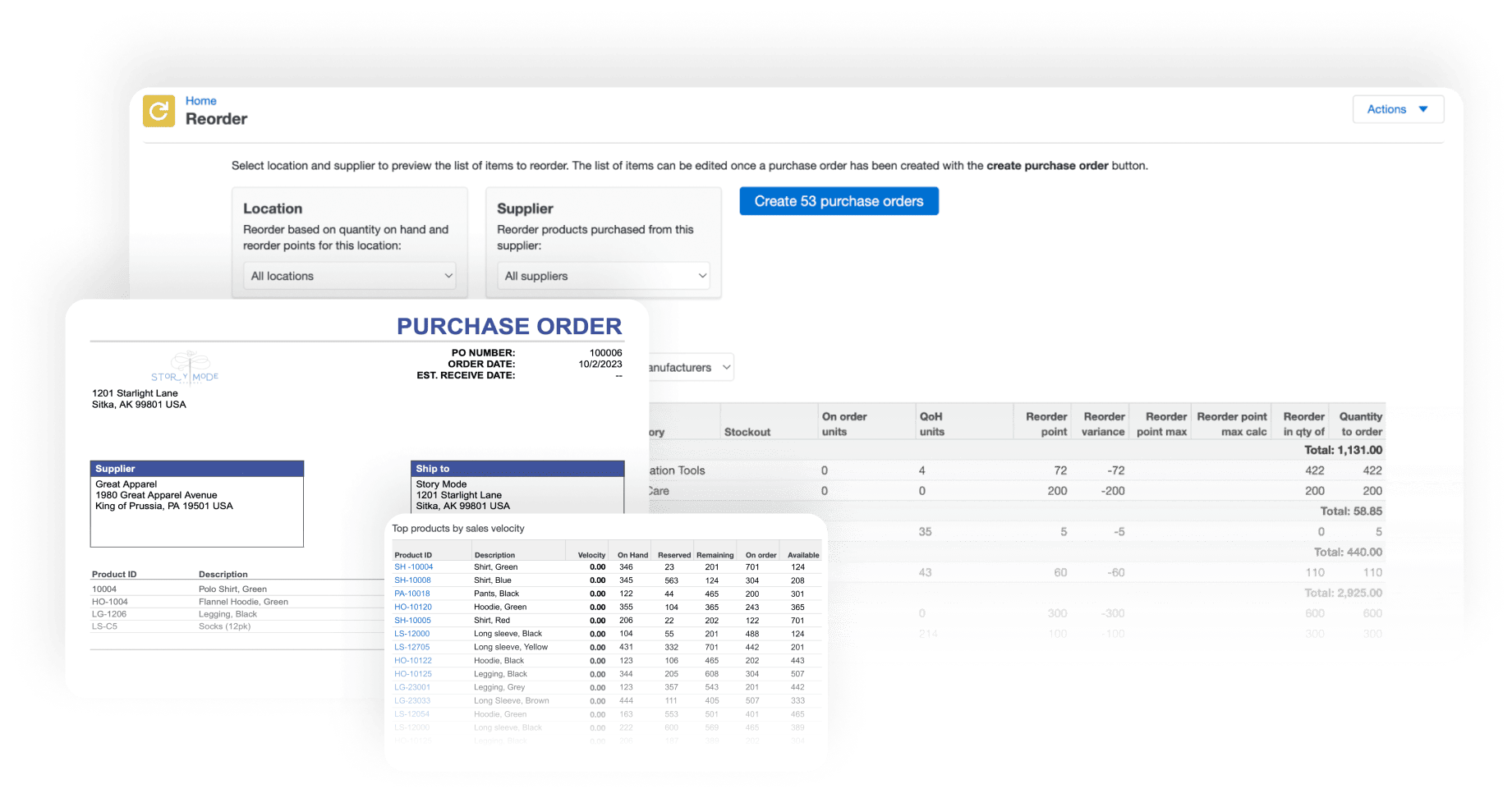
Still validate details during evaluation:
- What syncs automatically vs. manually?
- How is landed cost handled?
- How do returns affect COGS?
- How are adjustments represented?
- How does it avoid duplicates and “double-posting” scenarios?
Accounting integrations are where “looks good” can turn into “wait, why is this duplicated,” so this is a demo requirement—not an afterthought.
Reliability and trust: uptime signals and security posture
Reliability and operational transparency
Finale maintains a public status page. On December 22, 2025, it shows “All Systems Operational” and lists no incidents reported for that day and several days prior.
Status pages are not only about outages. They are about vendor behavior. A vendor with a public status page is at least willing to be visible when things go wrong.
StatusGator, which tracks the Finale status page, states that the last officially acknowledged outage was on October 20, 2025.
Finale InventorySecurity posture: what is stated publicly (and what to validate)
Security and compliance language can be vague in SaaS marketing, so it helps to separate:
- What the vendor states publicly
- What you should confirm during procurement
What Finale states publicly:
- Finale has published content that claims SOC 2 compliant hosting in the context of its cloud WMS positioning.
- Finale states its platform is hosted on Amazon Web Services.
- The barcode scanner app listing notes data encryption in transit.
What to validate if security matters in your environment:
- Security documentation and audit reports (under NDA if needed)
- Role-based access controls and permission granularity
- Authentication options (including MFA support if available)
- Data retention and backup policies
- Integration security model (token scopes, rotation, least privilege)
- Incident response process and escalation path
Finale’s pricing page also mentions the possibility to enter MSA and NDA agreements, which is a signal it expects more formal procurement for some customers.
Support and learning resources
Finale lists a combination of onboarding help, training sessions, and multiple support channels, plus a dedicated account manager.
It also publishes a broad set of help resources, videos, and developer documentation (including REST, GraphQL, reporting API, and import API documentation).
This matters because inventory software is not “set it and forget it.” You will change workflows as you add channels, add locations, introduce kitting, move into wholesale, or tighten finance reconciliation.
Pros and cons
What Finale does very well
- Strong warehouse + barcoding workflows: wave picking, batch picking, pick & pack, scan confirmations, and a feature-rich barcode app are not afterthoughts.
- Platform-level customization: unlimited custom fields and per-user screen customization reduces friction across roles.
- Integration posture: built for multichannel; emphasizes a large integration ecosystem plus API and EDI access.
- Developer-grade data access: Reporting API outputs CSV/JSON, plus REST and GraphQL APIs.
- Accounting integration posture: QuickBooks Online sync is positioned as deep (valuation, bills, invoices, COGS).
Where Finale may feel weaker (depending on your needs)
- Pricing transparency can feel messy: official pricing starts at $499/month, while third-party listings show lower tiers.
- Not a full ERP: if your end goal is one system for inventory, finance, manufacturing, HR, and advanced planning, Finale is not trying to be that.
- Advanced features reward process maturity: forecasting, wave picking, and EDI are powerful, but they require clean data and disciplined workflows.
Alternatives and comparisons
Finale sits in a competitive space. The “right” alternative depends on what you are optimizing for.
If you want a traditional ERP-style system
- NetSuite: deep, broad, expensive, heavy implementation. Best when you want one platform across many functions.
- Acumatica: strong ERP posture with inventory and distribution depth.
Choose these if you are ready for a big implementation and want finance and ops tightly unified.
If you want ecommerce-focused inventory platforms
Tools like Cin7, Unleashed, Katana (especially for manufacturing), and others compete here. Differences typically come down to warehouse workflow depth, barcoding, integration reliability, purchase planning, and reporting/customization.
Finale’s distinctive angle is that it talks like a warehouse operations product, not only an inventory sync tool. Wave picking and scanner-driven workflows are central.
If you primarily need shipping and fulfillment tooling
If your main pain is shipping labels and shipping automation, you may be happier with a dedicated shipping tool that integrates with your inventory layer. Finale can sit above shipping tools via integrations, but it is not trying to be only a shipping label engine.
If you are leaving QuickBooks Commerce
Finale has positioned itself publicly as an alternative path for teams moving away from QuickBooks Commerce, emphasizing cloud hosting and ecommerce inventory reliability. If that is your situation, Finale is worth a close look, especially if you want deeper warehouse workflows.
Who Finale Inventory is best for (and who should avoid it)
Finale is a strong fit if you recognize yourself in at least three of these
- You sell across multiple channels and overselling is a real risk
- You need multi-warehouse control and location-level accuracy
- You want barcode scanning for receiving, picking, transfers, and cycle counts
- You have enough order volume that wave picking or batch picking is attractive
- You want purchasing tied to reorder logic and sales velocity
- You want exports, reporting APIs, and better analytics
- You want QuickBooks Online to reflect inventory reality with less manual work
Who should avoid Finale
You should probably pass if:
- You are extremely small and only need basic inventory counts
- You want the lowest cost tool and do not need barcoding or workflow control
- You want a full ERP that covers finance, HR, deep manufacturing, and advanced planning
- You want marketing automation-style segmentation and campaigns inside the inventory system
Finale is an operations platform. If you do not need operations depth, it may feel like too much.
Finale InventoryFinal thoughts and recommendation
Finale Inventory looks like a product built by people who understand that inventory is not a spreadsheet problem. It is a workflow problem.
The strongest parts are the operational ones:
- barcode scanning with real warehouse workflows
- picking methods like wave picking with scanner guidance
- customization that respects different roles
- APIs that treat reporting and data access as first-class capabilities
If I were advising a growing ecommerce brand that is starting to feel inventory stress, Finale would be on the shortlist—especially if the warehouse is becoming a real operation rather than a backroom shelf.
Primary caution: treat pricing as a quote-driven conversation. Use public pricing signals to understand the tier shape, but confirm your real price using your order volume, channels, integrations, and barcode needs.
Finale Inventory
Finale Inventory is a cloud-based inventory management system that is easy to understand, affordable, and adaptable to the needs of the user’s business. Finale supports barcoding, QuickBooks, serial number tracking, lot id tracking, multi-channel e-commerce (including ShipStation inventory management), multi-locations, and a broad range of features for warehouse and ecommerce applications. Finale is designed to support a wide range of inventory management applications for warehouse management and multi-channel ecommerce inventory customers. Finale Inventory has integration to many selling platforms including eBay and Amazon, and will mitigates the headaches due to overselling. Finale will automatically update the selling channels every five…
• Inventory Management
• Order Management
• QB Desktop and Online Integration
• Lot ID Tracking
• Serial Number Tracking
• Kitting / Product Bundling for eCommerce
• Builds for Light Assembly or Light Manufacturing
• 3rd Party Add-Ons and Integrations
• Bronze - $149/month or $1500 paid annually
• Silver - $225/month or $2250 paid annually
• Gold - $299/month or $3000 paid annually
• Platinum - $449/month or $4500 paid annually
• Custom - Call
• Inventory Management
• Order Management
• QB Desktop and Online Integration
• No software to install
• Integration to multiple selling platforms
• Support High Transaction Volumes
FAQ (15 questions)
1) Is Finale Inventory mainly for ecommerce, or can wholesalers use it too?
It is clearly ecommerce-focused, but Finale also supports workflows that matter for wholesale, including purchasing, transfers, and EDI partner integrations such as SPS Commerce.
2) Does Finale support Amazon FBA workflows?
Finale explicitly calls out FBA in its ecommerce inventory management feature set.
3) Can Finale handle multiple warehouses and bin locations?
Finale emphasizes multi-warehouse inventory and warehouse operations features, including audits, cycle counts, and barcode workflows tied to warehouse locations.
4) Does Finale include barcode scanning?
Yes. Finale highlights a barcode WMS module and mobile barcode scanning workflows.
5) What devices does the Finale barcode scanner app run on?
The official mobile scanner app is available on Google Play, indicating an Android-based workflow.
6) Is barcode scanning included in all plans?
The Google Play listing notes that Finale accounts must have the Gold plan or above to use the barcode scanning application.
7) Does Finale support wave picking?
Yes. Finale provides wave picking and describes it as batching similar orders and picking for all orders simultaneously, supported through the mobile scanner.
8) What is the practical benefit of wave picking?
Finale states wave picking can reduce the number of picking trips and allows picking and packing multiple orders in a single trip with consolidated pick lists.
9) Does Finale support lot tracking and expiration dates?
Yes. Finale lists lot ID/batch ID tracking and expiration date tracking, plus serial tracking, in its barcode module feature descriptions.
10) Can Finale print barcode labels?
Yes. Finale highlights barcode label printing (including QR codes) and custom label content including UPC/QR/EAN, serial numbers, lot IDs, bins, and warehouse locations.
11) Does Finale integrate with QuickBooks Online?
Yes. Finale promotes a QuickBooks Online integration and states it synchronizes inventory valuation, bills, sales, invoices, and COGS.
12) Can Finale export reports to spreadsheets?
Finale lists exports to Excel and Google Sheets for reporting.
13) Does Finale have an API?
Yes. Finale offers REST and GraphQL API access, and the developer documentation describes a REST API using JSON over HTTPS.
14) What is the easiest way to pull data out of Finale for analytics?
Finale’s developer documentation says the Reporting API is often the simplest approach—run reports and retrieve results in CSV or JSON.
15) Is Finale Inventory reliable enough for daily operations?
Finale maintains a public status page, and on December 22, 2025 it shows all systems operational with no incidents reported that day.


By clicking Sign In with Social Media, you agree to let PAT RESEARCH store, use and/or disclose your Social Media profile and email address in accordance with the PAT RESEARCH Privacy Policy and agree to the Terms of Use.